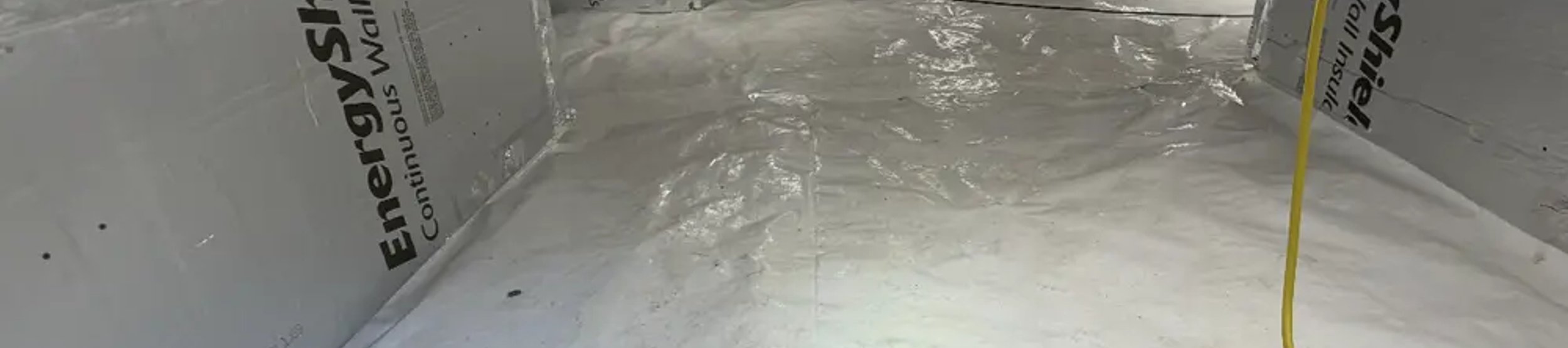
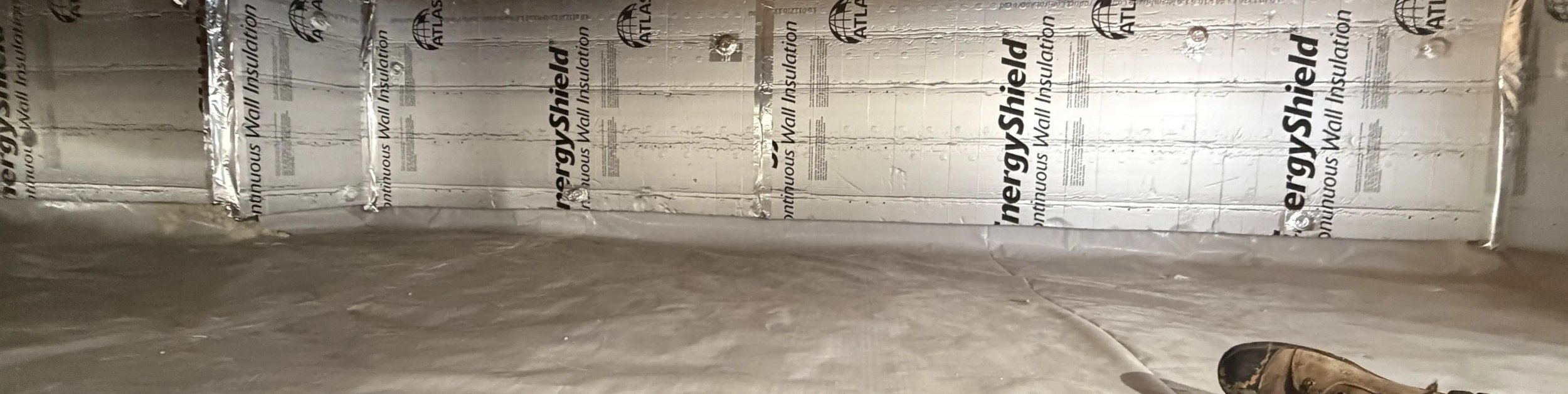
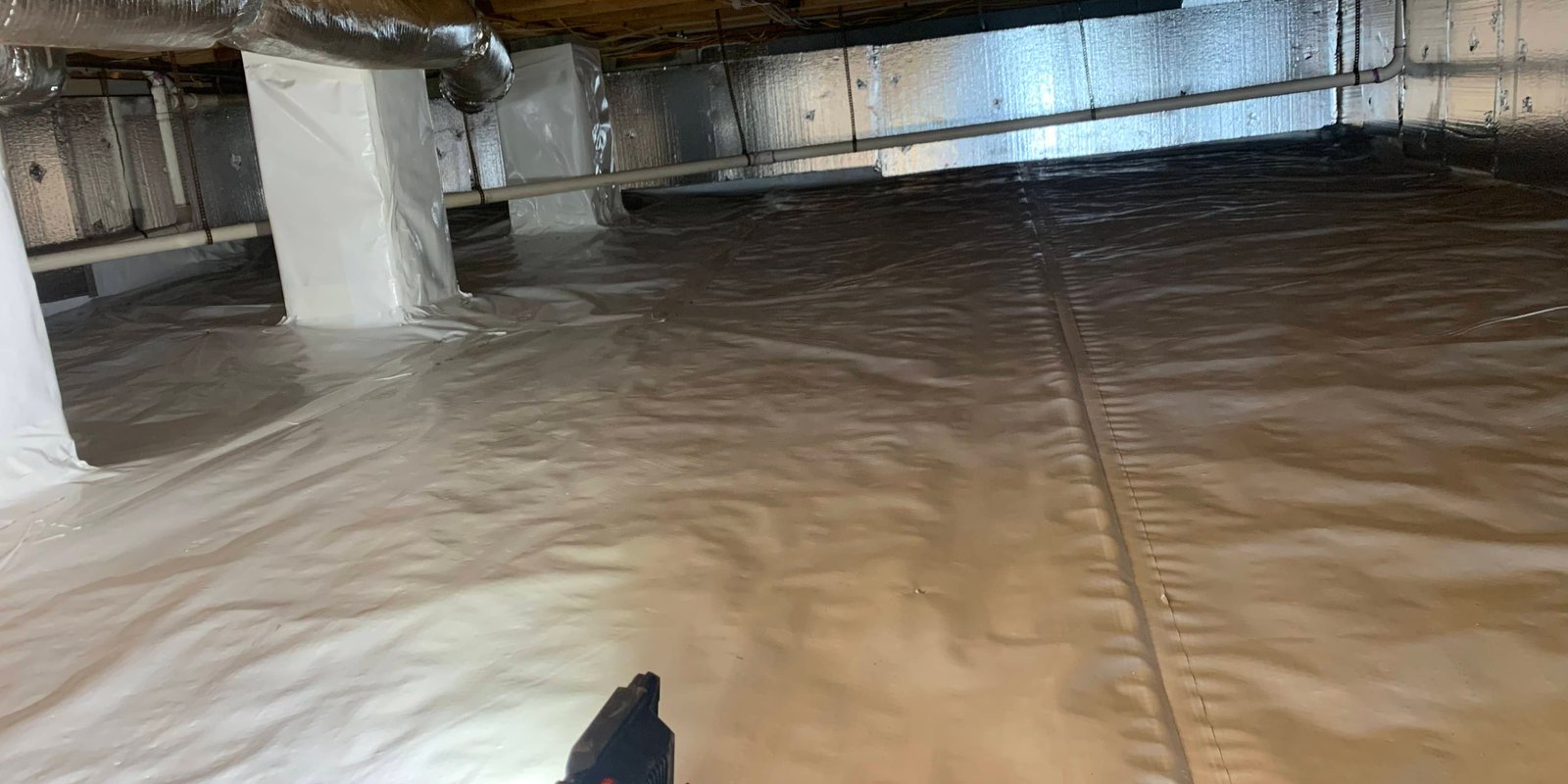

Most North Carolina homes with a crawl space need a crawl space vapor barrier, because the soil under the house gives off moisture all year. A properly installed liner covers the whole floor, runs up the walls and piers, and has sealed seams.
A loose sheet of plastic does some of that work. This guide explains what a vapor barrier does, when thin plastic is not enough, and how a good installation is done.
What does a crawl space vapor barrier do?
A vapor barrier covers the ground and slows the water vapor that rises from the soil. Soil releases vapor even when it looks dry. In a vented crawl space, that vapor mixes with warm outside air and condenses on cooler ducts, pipes, and framing.
The U.S. Department of Energy's crawl space vapor retarder job aid says exposed dirt floors let ground vapor and soil gases into the space when vapor retarders are missing or not effective. A well-installed one helps to minimize both. The agency lists radon as one of the soil gases.
Do you need one if your soil is sandy or clay?
Yes, in both cases. Sandy soil drains rainwater quickly, but it still gives off vapor. Clay holds more water and gives off vapor too. In both cases the air in a vented crawl space picks that moisture up and carries it to the framing above. Our post on soil and crawl space moisture in North Carolina explains how the two differ.
The bigger variable is humidity. Central North Carolina summers are warm and wet, and open vents let that air in. A liner on the floor handles the ground moisture, and sealing the rest of the space handles the air.
What are the signs your vapor barrier is missing or failing?
These signs show up most often:
- A musty smell in the house, especially on warm days
- Cold or damp floors
- Sagging or wet insulation under the floor
- Condensation on ducts or pipes
- Mold or mildew on framing
- Plastic that is torn, bunched, or missing
If you see several, a free inspection will show how serious the moisture is.
When is thin plastic sheeting not enough?
Many older homes have a thin plastic sheet on the crawl space floor. Thin plastic tears, shifts, and bunches up over time. It is rarely sealed at the walls or around the piers, so moisture and humid air still reach the space.
A proper liner works as a system:
- Heavy-duty material. The Department of Energy job aid sets a 6-mil minimum thickness and a low permeance rating. Reinforced, heavier liners are common in full encapsulation.
- Full coverage. The liner covers the floor as completely as practical.
- Walls and piers. The plastic runs at least 6 inches up walls, piers, and columns and is securely attached.
- Sealed seams. Seams overlap by at least 12 inches and are taped.
- Sealed edges. The edge is sealed to the foundation and around supports.
The details matter because moisture follows the easiest path. A gap at the wall, an untaped seam, or a torn spot near a pier gives vapor a way through. A liner that is attached and sealed keeps working long after the day it was installed.
If you are comparing contractors, ask about these points:
- What material and thickness do you use?
- How far does the liner run up the walls and piers?
- How are the seams joined and sealed?
- What happens to the old plastic and any debris?
- Is the rest of the crawl space sealed, or only the floor?
How is a vapor barrier different from full encapsulation?
A floor vapor barrier helps. Encapsulation goes further by sealing the walls and vents and adding humidity control. In most central North Carolina homes, humid summer air is a larger source of moisture than the soil alone, so we usually recommend the full system.
Our guide on what crawl space encapsulation is walks through the whole process. You can also read our crawl space encapsulation page.
Do you also need a dehumidifier?
Most sealed crawl spaces benefit from one. The liner handles ground moisture, and a dehumidifier keeps the remaining humidity in a healthy range. The U.S. Environmental Protection Agency advises keeping indoor humidity below 60 percent, ideally between 30 and 50 percent. Learn more on our sump pump and dehumidifier page.
If mold is already present, it needs treatment before the liner goes down. Covering it leaves the problem in place. Our mold remediation page explains how we handle it.
What does installation look like?
Installation follows a clear order:
- Inspection and quote. We check moisture, mold, insulation, vents, and drainage, then give you a written quote before any work starts.
- Preparation. We clear debris and damaged insulation and level the ground where needed.
- Liner installation. The liner goes across the floor, up the walls, and around the piers.
- Sealing. Seams and edges are taped and sealed, and the vents are closed.
- Humidity control. We add a dehumidifier and any drainage the inspection calls for.
Most residential jobs finish in one to three days, depending on the size of the space and how much needs to be cleared. A clean, sealed floor also makes later work easier. A technician can check the system, add insulation, or service the dehumidifier without kneeling in dirt. We are based in Cary and work across the Triangle, Sanford, Fayetteville, and the Sandhills. See the communities we serve or request a free inspection.