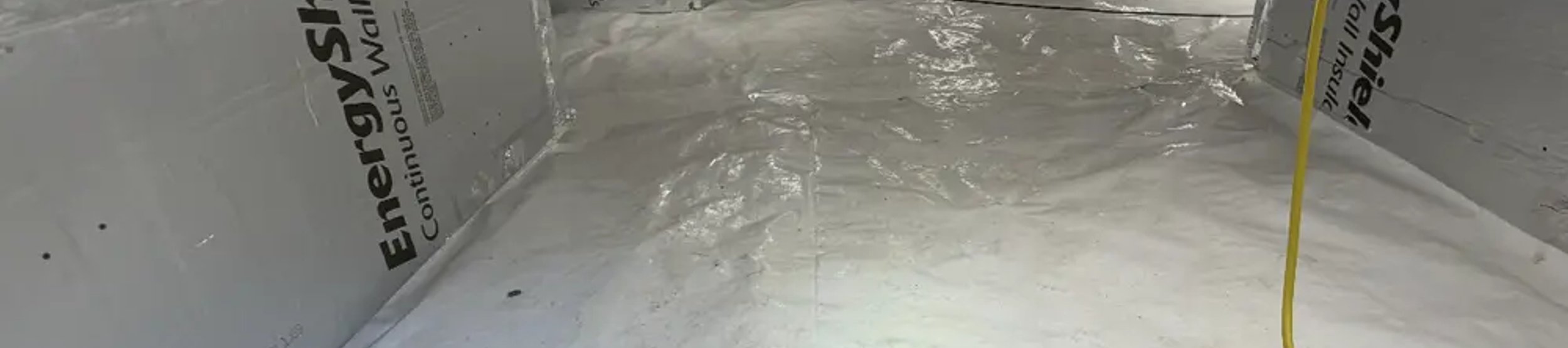
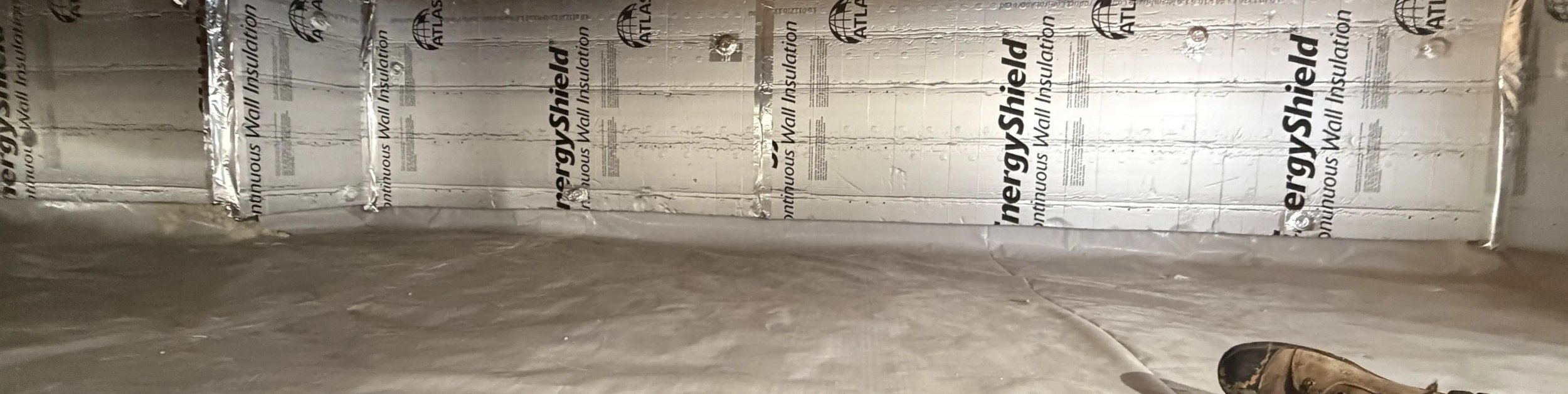
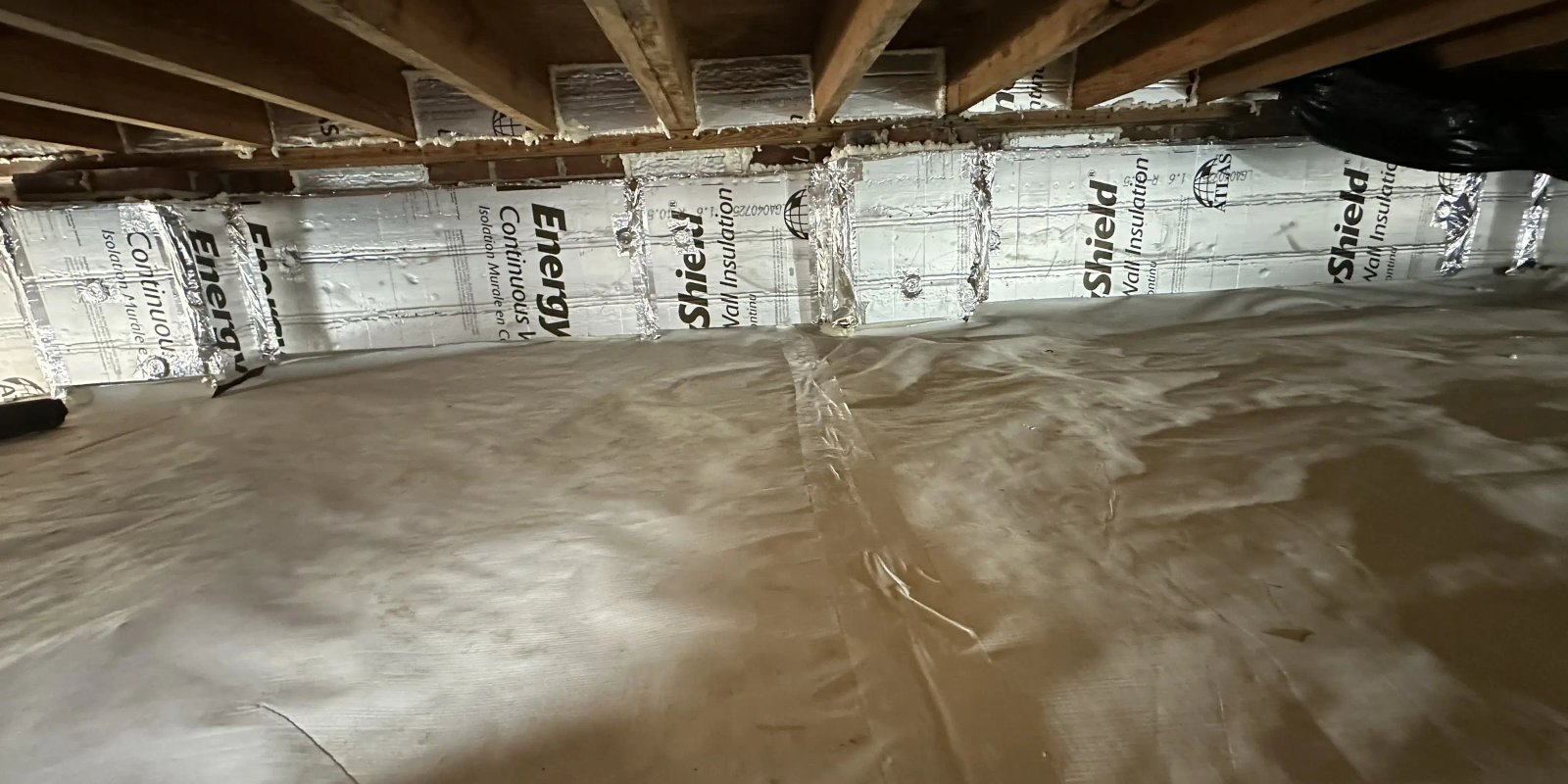

What is crawl space encapsulation? It is a way of sealing the crawl space under your house so outside air and ground moisture stop entering it. A heavy-duty liner covers the floor and walls, the seams and vents are sealed, and a dehumidifier usually keeps the air dry.
Most crawl spaces in North Carolina were built with open vents and bare dirt. That design lets humid air in all summer. This guide explains how encapsulation works, what the process includes, and how to tell if your home needs it.
What is crawl space encapsulation and how does it work?
Encapsulation turns a vented, damp crawl space into a sealed, controlled one. Two things drive moisture into a crawl space. One is water vapor rising from the soil. The other is humid outside air that enters through the vents. Encapsulation addresses both.
A continuous liner stops soil vapor at the ground. Sealed vents and walls keep humid air out. A dehumidifier then holds the remaining air at a healthy level.
The U.S. Environmental Protection Agency advises keeping indoor humidity below 60 percent, ideally between 30 and 50 percent, and a sealed space makes that target far easier to reach. You can read the agency's guide to mold and moisture for the full recommendation.
What does an encapsulated crawl space include?
A complete job has several parts that work together:
- Cleanout. Debris, old plastic, and damaged insulation come out first.
- A ground liner. Heavy-duty plastic covers the floor, runs up the walls, and wraps the piers.
- Sealed seams and edges. Overlaps are taped and the edges are sealed to the foundation.
- Sealed vents. Foundation vents are closed so humid air stays out.
- Humidity control. A dehumidifier keeps the air dry. Some homes also need drainage or a sump pump.
- Insulation. Wall insulation, or floor insulation above, keeps the space comfortable.
The U.S. Department of Energy's crawl space vapor retarder job aid describes the liner steps: cover the floor as completely as practical, extend the plastic at least 6 inches up walls and piers, overlap seams by at least 12 inches, and seal the edges.
Why do crawl spaces get damp in North Carolina?
Central North Carolina has warm, humid summers, and a vented crawl space lets that air straight in. When warm, wet air meets cooler surfaces like ducts, pipes, and framing, water condenses on them. Wood that stays damp can grow mold and rot over time.
The soil adds moisture too. Even ground that looks dry gives off water vapor all year. Heavy rain can raise it further, especially where gutters or grading send water toward the foundation. Our guide on soil and crawl space moisture in North Carolina explains how the Piedmont and the Sandhills differ.
How is encapsulation different from a vapor barrier alone?
A vapor barrier on the floor is one part of encapsulation. It helps, and it works best when the rest of the space is sealed too. Open vents and unsealed walls still let humid air in, and the dehumidifier is what controls the air itself.
Encapsulation treats the crawl space as a complete system. Read our post on whether you need a crawl space vapor barrier for how the floor liner fits in.
What does the encapsulation process look like?
Every crawl space is different, so the order and the details change from home to home. Most residential jobs follow these steps:
- Inspection. We check moisture, mold, insulation, vents, and drainage.
- Written quote. You see the full scope before any work starts.
- Preparation. We clear debris and damaged insulation and level the soil where needed.
- Liner installation. The liner goes across the floor, up the walls, and around the piers.
- Sealing. Seams, edges, and vents are sealed.
- Humidity control. A dehumidifier is installed, along with drainage if the inspection calls for it.
Most projects take one to three days, depending on the size of the space and how much needs to be cleared. Our crawl space encapsulation page covers each step in more detail.
After the work, the crawl space looks very different. The floor is covered with a clean white or gray liner, the piers are wrapped, the vents are closed, and a dehumidifier sits on a block with a drain line. You can still enter through the access door to check the system, and a quick look once or twice a year is enough for most homes.
Does every crawl space need encapsulation?
No. A crawl space that is already dry, sealed, and insulated may only need maintenance. A vented crawl space with damp soil, musty air, or sagging insulation usually benefits the most.
Encapsulation also does not fix every problem by itself. Plumbing leaks, gutters that dump water at the foundation, and structural damage each need their own repair. That is why the inspection comes first. It separates the moisture problems encapsulation solves from the ones that need a different fix.
A few situations point toward encapsulation:
- Standing water or damp soil after rain
- Condensation on ducts or pipes
- Mold or mildew on framing
- Insulation that is wet, sagging, or falling down
- A musty smell that comes up through the floor
If water is collecting, the water source needs attention first. See our guide to standing water in a crawl space.
How do you find out if your crawl space needs it?
A free inspection answers the question. We look at the moisture level, the condition of the framing and insulation, the vents, and where water enters, then explain what we found. We are based in Cary and work across the Triangle, Sanford, Fayetteville, and the Sandhills.
See the communities we serve or request an inspection. You can also call or text (910) 635-4943 any day from 5 AM to 10 PM.